A 6-minute read
Some journeys begin with a question. Others begin with a decision you've been ready to make for quite some time. I've always appreciated the moment when a journey stops being a lovely possibility and begins to feel real.
A date finds its place on the calendar. A destination becomes more than a name. You begin thinking about the experiences you want to make room for. What I appreciate less is discovering that getting started requires another account, another password, or another process that seems to have very little to do with traveling.
Sometimes, you simply want to get on with planning the journey.
Perhaps you've been thinking about returning to a favorite destination. Maybe there's a city you've always wanted to explore, a landscape you've imagined standing before, or a particular experience that keeps finding its way into your thoughts. You don't need convincing. You don't need another list of reasons to go.
You're ready to begin.
And yet, somewhere between imagining the journey and making the arrangements, travel planning can become more complicated than it needs to be. For the independent traveler who already has a sense of direction, the challenge isn't always deciding whether to travel.
Sometimes, it's simply deciding what comes next.
When You're Ready, You're Ready
There's a difference between dreaming about a journey and being ready to put it in motion. Dreaming invites possibility. You can wander through photographs, read about unfamiliar places, and imagine the experiences that might await. But readiness feels different.
You begin looking at calendars rather than seasons. You consider actual routes instead of tracing possibilities across a map. You think about how long you can stay, what you want to experience, and what you're willing to spend. The journey begins to take shape in practical terms.
This is an important moment in thoughtful travel planning. Not because every detail must be settled, but because you've moved from what if? to how? And once you've reached that point, the most helpful guidance is often the kind that respects your momentum.



A Decision Doesn't Need Another Detour
Travelers have more planning resources available than ever. That abundance can be useful, especially when exploring an unfamiliar destination or comparing complicated arrangements. But more resources don't always mean more progress.
Sometimes you simply want to check flight possibilities, explore accommodations, compare a few experiences, and make a decision. You may not want to download another app, remember another password, or join a mailing list before discovering whether a resource is useful.
But there's also room for a different approach.
One that lets you find what you need, use it when it's helpful, and continue on your way. Thoughtful preparation should make travel easier to begin, not harder to organize. The goal isn't to eliminate research or rush important choices. It's to recognize when a little more information will genuinely help—and when it will simply postpone a decision you're already prepared to make.
Let Your Priorities Lead
Knowing where you want to go is a beginning. Knowing what matters to you helps determine how you'll get there. Two travelers can visit the same destination and create entirely different journeys.
One might choose a centrally located hotel to spend more time exploring on foot. Another might prefer a quiet neighborhood, even if it means a longer journey into the city.
One may build an itinerary around museums and historic sites. Another may want open afternoons, neighborhood cafés, and the freedom to follow an unexpected discovery.
Neither approach is more thoughtful than the other.
The important thing is understanding your own preferences before allowing someone else's recommendations to become your priorities. That includes knowing your boundaries.
You can appreciate a destination's culinary traditions without eating something that doesn't agree with you. You can admire an adventurous excursion without wanting to participate. You can recognize the appeal of a popular attraction and still decide it isn't how you'd like to spend your afternoon.
Cultural curiosity and personal authenticity can travel together.
Before committing to an arrangement, consider a few questions:
Does this choice reflect what I actually want from the journey?
Does it fit my time, budget, comfort, and energy?
Am I choosing it because it interests me, or because I feel I should?
Will it leave room for the experiences I value most?
These aren't questions meant to complicate planning. They're a way to simplify it. When you understand your priorities, you can spend less time considering options that were never right for you in the first place.



From Possibility to Commitment
Eventually, thoughtful preparation asks something of us: a decision. A date becomes definite. A flight is selected and booked. An accommodation is reserved. An experience moves from a possibility to a place on the itinerary. That can feel exciting—and occasionally a little daunting.
After all, choosing one option often means setting aside another.
But a good travel decision doesn't require knowing every possible alternative. It requires enough reliable information to make a choice that fits your circumstances.
For practical arrangements, that might mean checking:
The details: Dates, destinations, locations, and what's included.
The conditions: Cancellation policies, payment terms, and any important restrictions.
The fit: Whether the arrangement supports the kind of journey you want.
The next step: What needs to be reserved now, what can remain flexible, and what needs to be protected.
Some decisions deserve careful comparison. Others can be made once you've found something that meets your needs. And not everything needs to be decided before departure.
A thoughtfully planned journey can include confirmed arrangements and open possibilities. In fact, leaving a little room for discovery may be one of the best decisions you make.
The Next Step Is Yours
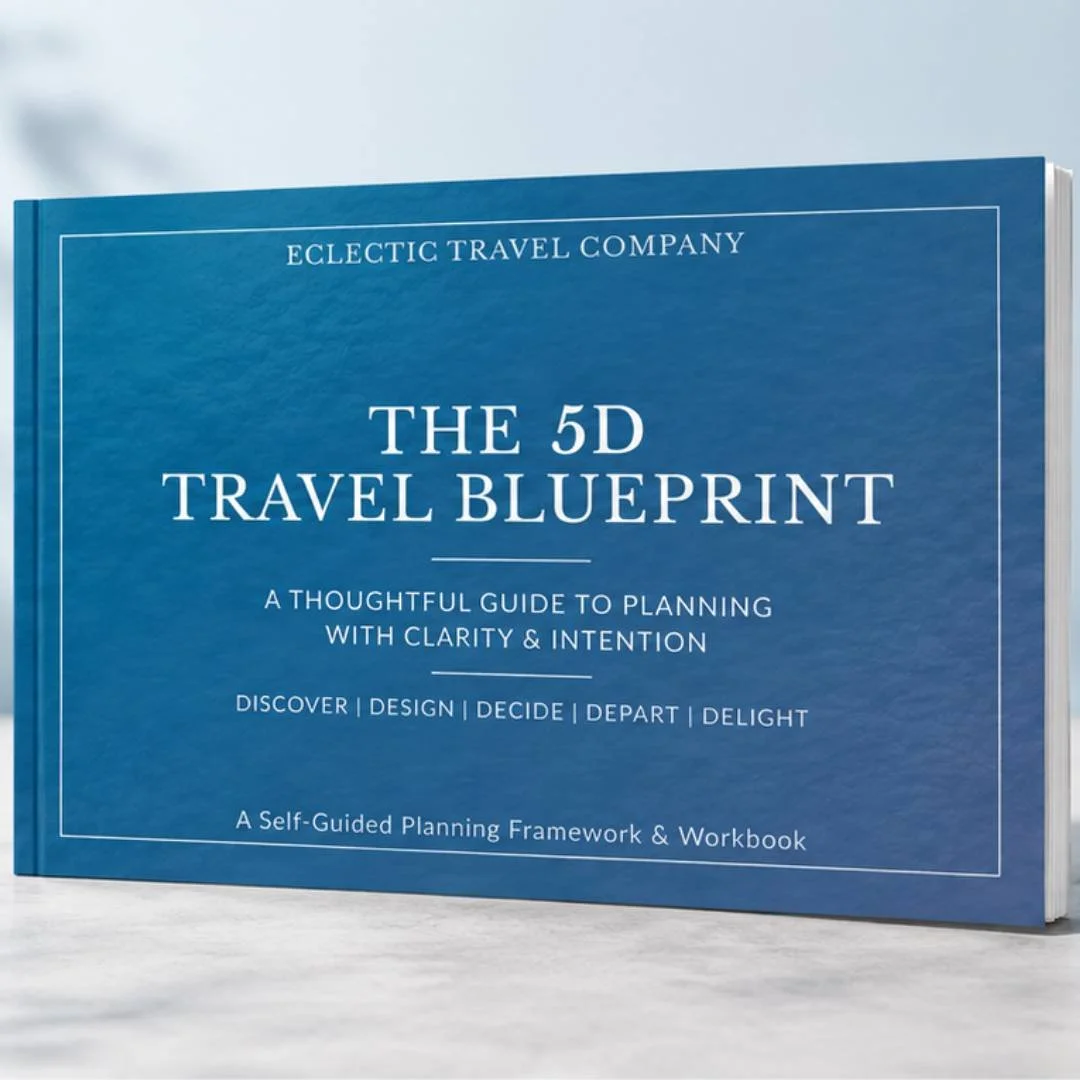
The 5D Travel Blueprint offers a way to think about the journey from its earliest inspiration through the experiences that stay with you afterward.
Discover opens possibilities.
Design gives them shape.
Decide gives them direction.
This is where preparation becomes action—not through pressure or a perfect itinerary, but through choices that feel right for you. And you don't have to make every decision at once.
Perhaps your next step is comparing transportation. Perhaps it's finding a place to stay, looking into an experience, or gathering the practical details that will help you feel prepared.
Our Travel Resources bring together practical tools you can explore whenever you need them. Start with the decision in front of you, follow what interests you, and return whenever another part of your journey is ready to take shape.
No need to explore everything today. No need to make your journey look like anyone else's.
Just find what serves your plans and take the next thoughtful step. Your journey is yours to decide.
For a practical place to begin, explore our curated Travel Resources to find tools that fit your journey. Or, if you'd like a broader framework for planning, download the free 5D Travel Blueprint guide and workbook.
Continue Your Sojourn
Explore what sparks your curiosity next.