Intentional Travel | Mindful Planning | Sojourner Lifestyle | Travel PhilosophyA 3-minute read
Travel planning can become overwhelming when you try to make everything perfect all at once. Tabs multiply. Notes pile up. Advice contradicts itself. And somewhere between the “must-see” lists and the booking deadlines, the original sense of excitement starts to fade.
What’s often missing isn’t effort or intelligence—it’s a way to decide what actually matters first.
A perfect itinerary promises certainty. A framework offers something more useful: direction.
Frameworks as Guardrails, Not Instructions

A thoughtful flat-lay featuring a world map, a vintage-style notebook, a pen, and an air ticket, symbolizing the shift from rigid itineraries to a clear, self-directed planning framework.
A thoughtful flat-lay featuring a world map, a vintage-style notebook, a pen, and an air ticket, symbolizing the shift from rigid itineraries to a clear, self-directed planning framework.
Think of a framework as guardrails rather than instructions. Guardrails don’t tell you exactly where to go or how fast to move. They simply keep you oriented, helping you avoid the edges while leaving you free to choose your path. In travel planning, that kind of support matters far more than a rigid schedule.
Without guardrails, planning often becomes reactive. Decisions pile up all at once. Every option feels equally urgent. The small choices—where to stay, how long to linger, what to book early—start carrying more weight than they should.
A framework restores proportion. It helps you understand when a decision matters, why it matters, and when it’s safe to move on without second-guessing.
Adaptability Over Rigidity
A framework helps you adapt when plans change, energy fluctuates, or unexpected opportunities arise. It gives you priorities to return to, so you can adjust an itinerary without rethinking the entire journey.
A Field-Tested Planning Insight:
Over time, certain patterns begin to emerge. For example, I learned to “bookend” trips with lighter days—easing into a place at the beginning, and softening the landing before returning home. The most demanding experiences tend to land best in the middle, once jet lag has eased and rhythms have settled. That isn’t a rule; it’s a guardrail—one that leaves room for adjustment while quietly improving how the journey feels.
Confidence Through Clarity
When used well, guardrails create confidence. They reduce decision fatigue not by limiting choice, but by clarifying priorities. You’re no longer asking, “What should I do next?” You’re asking, “What matters most right now?” That shift alone makes planning feel lighter and travel itself more present.
Eventually, I noticed that the trips that felt most meaningful weren’t the most detailed ones—they were the ones shaped by a clear set of guiding questions. Those questions became a repeatable way of thinking that could be reused, adapted, and trusted across different destinations.
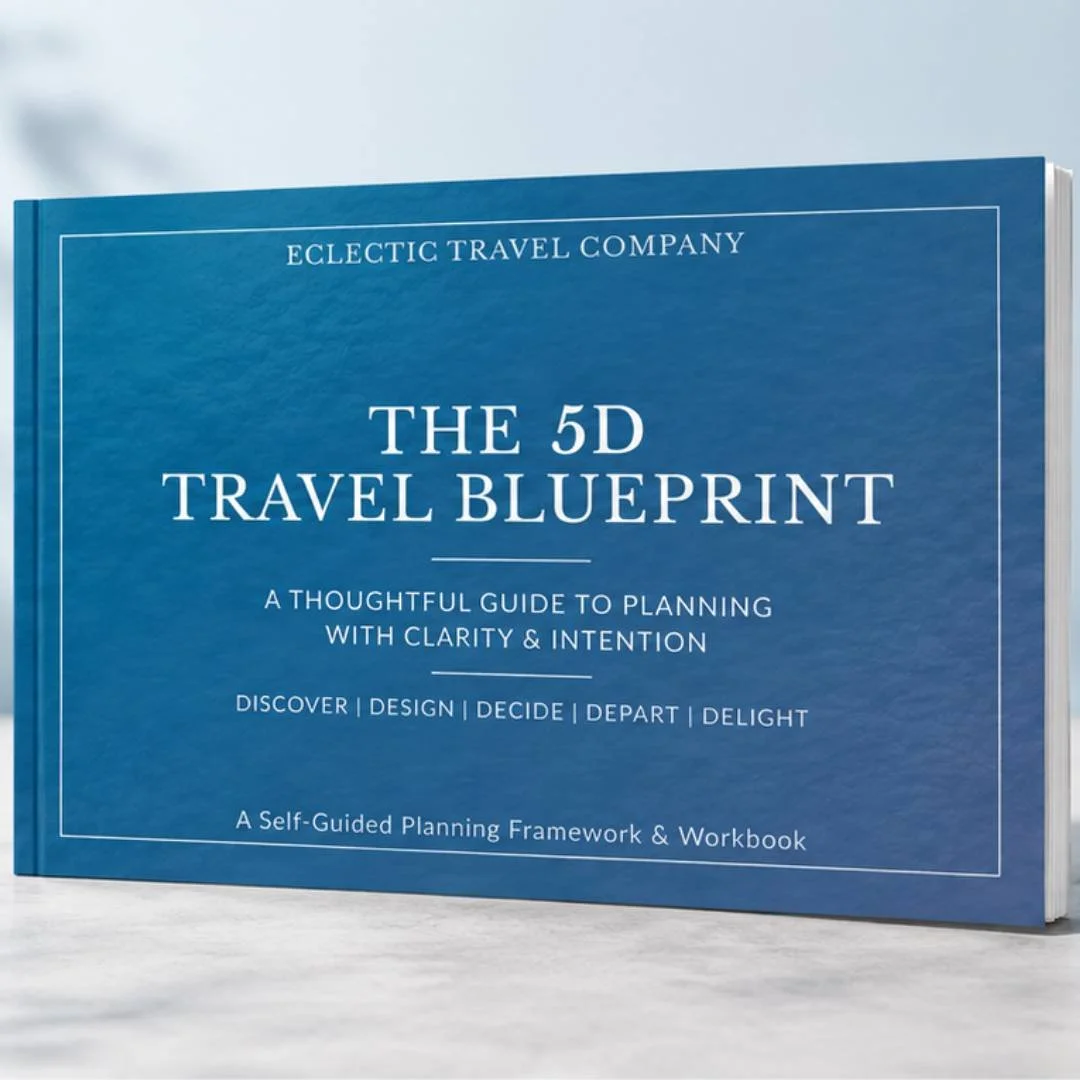
That way of thinking ultimately became the foundation of The 5D Travel Blueprint.
The most satisfying journeys aren’t planned down to the minute. They’re built on clarity, clear priorities, clear intentions, and enough structure to support the experience without constraining it. A good framework doesn’t remove spontaneity; it protects it.
You don’t need a perfect itinerary. You need a way of thinking that helps you prepare thoughtfully, adapt confidently, and leave room for wonder as the journey unfolds.
For a practical place to begin, explore the free 5D Travel Blueprint or explore Sojourner’s Index: A Living Collection, our curated Recommended Tools & Resources hub.
Continue Your Sojourn
Explore what sparks your curiosity next.